About the Trust
The Will Ogilvie Memorial Trust was established to celebrate and promote the life, work, and enduring legacy of Will H. Ogilvie, one of Scotland’s most beloved poets of the Borders and beyond.
The Trust is dedicated to encouraging interest in Ogilvie’s poetry and values, supporting literary and cultural activity connected to the Scottish Borders, and fostering a love of poetry, history, and the spoken word in future generations. Through events, education, and preservation, the Trust seeks to ensure that Will Ogilvie’s voice, spirit, and contribution to Scottish literature continue to inspire.
Meet The Trustees
Ann Holt BEM
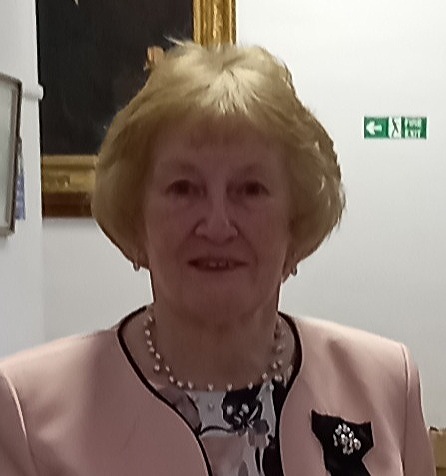
“When and why did Patricia Ann Holt (m.s. Ogilvie) became a trustee?”
I became a trustee when the Will H. Ogilvie Memorial Fund gained charitable status in March 2014 when the name was changed to the Will H. Ogilvie Memorial Trust and members became trustees.
It was on Wednesday, 28th June, 1989 when I was first asked by James Jackson, a farmer near Lockerbie, if I would help him get some recognition for the Borders poet Will H. Ogilvie – and there the work began.
It took two years to get a small group of like minded people together and our first committee meeting was held in the Eskdale Hotel, Langholm on Friday, 27th December, 1991. There were seven committee members:- James Jackson, Ann Holt, William and Ian Landles, Billy Young, Euphen Alexander and Graham Murray.
It was decided at this meeting to begin raising funds to erect a memorial cairn on the hill road between Roberton and Ashkirk and to reproduce his last book ‘Border Poems’.
Two years later, with much local support, both these goals were realised and a cairn was unveiled by the poet’s son George on Saturday, 21st August, 1993 which happened to be the 124th anniversary of the poet’s birth.
“How did Will draw you into his world?”
My interest in the poet grew when I realised he was largely forgotten both in his native Scotland and Australia where he spent the years from 1889 to 1901 and where he had his first book ‘Fair Girls and Gray Horses’ published by The Bulletin in 1898.
His son George told me no one had been interested in his father for thirty years and his books were out of print. The committee members set about rectifying that. Once you are drawn into Will’s web he doesn’t let you go, it just becomes more interesting.
“What is your favourite poem?”
For me the first time I read the haunting lines of ‘The Coach of Death’ in his first book I was enthralled. Of course ‘The Raiders’ and ‘Ho! For the Blades of Harden’ are home grown poems and equally as haunting. ‘Boots for Betty’ in the new anthology ‘Belialie and Beyond’ is also a favourite of mine as it shows the fatherly side of our poet. These are but a few of my favourites but there are many more.
“Do you have a favourite W.H.O. location, and if so, why?”
‘Harden’ for me is special for many reasons – the site of both our cairns and it is mentioned in several of Will’s poems. It is also one of the most beautiful locations in the Scottish Borders.
Ian W Landles BEM
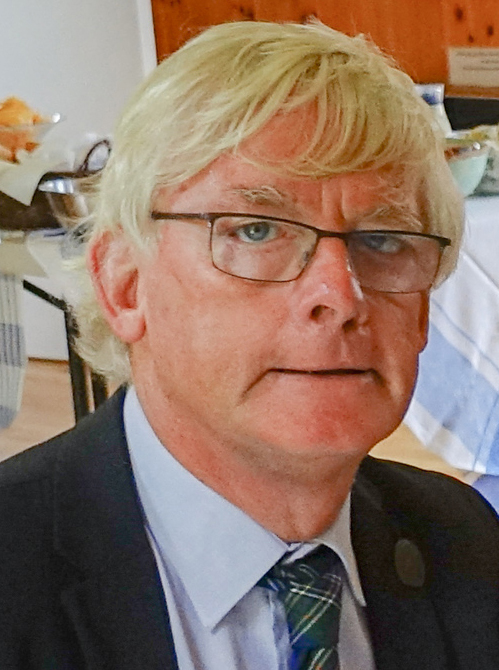
I was a member of the original Will H Ogilvie Memorial Committee from its inception in the early 1990s and when in 2014 it became the Will H Ogilvie Memorial Trust I became a Trustee. I am now Chairman of the Trust.
My father William Landles, a well known Border poet in his own right, also an original Committee member, was a great admirer of Will and came to know him quite well. I was present as a boy of 7 at Will’s 90th birthday celebration at Kirklea, his home near Ashkirk, although I don’t remember much about it. My father, along with others tried to get an honour from the Queen for Will but nothing came of this. I often incorporate Will’s poems into the “My Borderland” illustrated talks that I give.
Call me old-fashioned but I like poetry which rhymes and has rhythm and this is what attracts me to Will’s work. My favourite poems are his Border ones which celebrate our matchless landscape and the reiving era. His epic riding ballad “Whaup of the Rede” is a tour de force and other particular favourites of mine are “Teviot” and “The Hoofs of the Horses”.
I have several favourite Ogilvie locations – Bowmont Water and “where the baby Teviot comes crooning through the peat” in The Barefoot Maid” but as “my heart’s a Border heart” I never tire of visiting Harden Glen to “hear the blue hills ringing with the restless hoofs again”.
Will has left us a great legacy and I am honoured to be able to help hand this on to a new generation.
A. Philip Murray
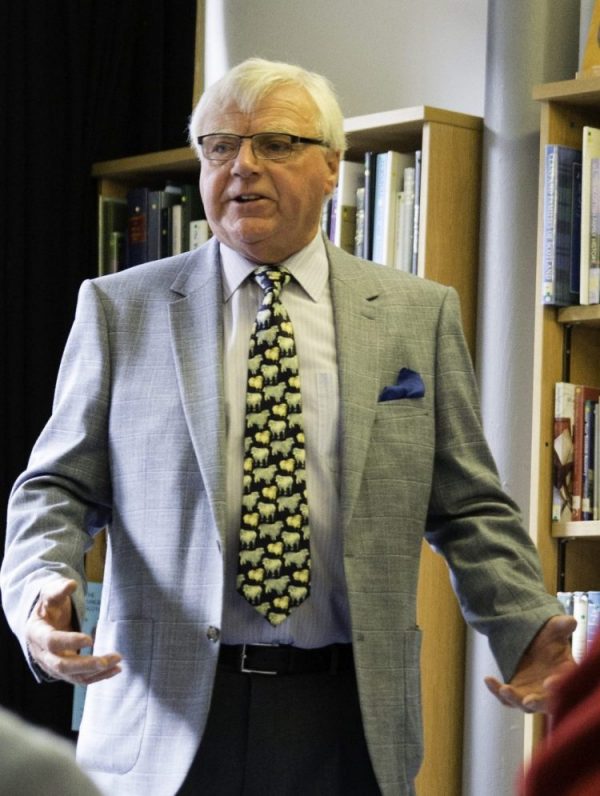
Having been brought up with horses and having lived among them all my life, and as Will H. Ogilvie himself lived much of his life in open spaces and hills, I thought it appropriate to write on these subjects for this website.
My family were steeped in rural life and, like my eldest brother Graham—who was a founder member of the Memorial Committee—I was interested in Will H. Ogilvie’s writings from an early age. My first recollection is reciting “The Barefoot Maid” at a West Port Church Sunday School concert in 1951.
Being brought up with horses and the outdoors at Branxholm Braes, and as a four-year-old having ridden Clydesdales home from the hay fields, as well as ponies that would buck you off at the flick of a switch, my attention soon turned towards Ogilvie’s poems with horses and hills in mind. Standing at the top of Branxholm Braes, it’s easy to think of “The Land We Love”:
Just a line of blue hills to remember,
Just a valley one fails to forget,
Whether bound with the gold of September
Or with jewels of midsummer set!
As you look over these hills and glens, where generations have lived for centuries, Will Ogilvie wrote about their love and passion for them, and you can but wonder what stories they could tell. From Ettrick Pen to Teviot Stone to Cauldcleuch, and from The Road to Roberton:
Greatmoor, Windburgh, the long line of The Carter,
Teviotdale flung wide;
A slight stir in the heather, a wind from the English side.
To the Cheviot on the English side of the Border, with its snow-covered shoulder and Bowmont Water, come these lines from “The Raiders”:
The floods are down in Bowmont Burn,
The moss is fetlock-deep;
Go back, wild wind of Lammermoor,
To Lauderdale and sleep.
There is a gap between Cauldcleuch and Greatmoor called the Queen’s Mire, where in 1566 Mary, Queen of Scots rode through to Hermitage to see her wounded lover, Bothwell:
To Hermitage! To Hermitage!—the river laughed in glee,
The beeches tossed their crimson flags; and glad at heart was she!
The hoofs made music down the glen, the bits were dancing gay,
From Jedburgh to Hermitage that bright October day.
To Hermitage again…
The whaups wheeled low upon the moor, like broken souls and lost,
And shadows crossed the Braidlee Burn before the horses crossed.
There are writings and poems by Will H. Ogilvie for everyone in this Border land of ours. Look them up and buy a book of his poems—you will never regret it. Heart, if you have a sorrow, take it to the hills. And again, “The Land We Love”:
There’s a spell in this Land of the Marches,
In this Border that gave us our birth.